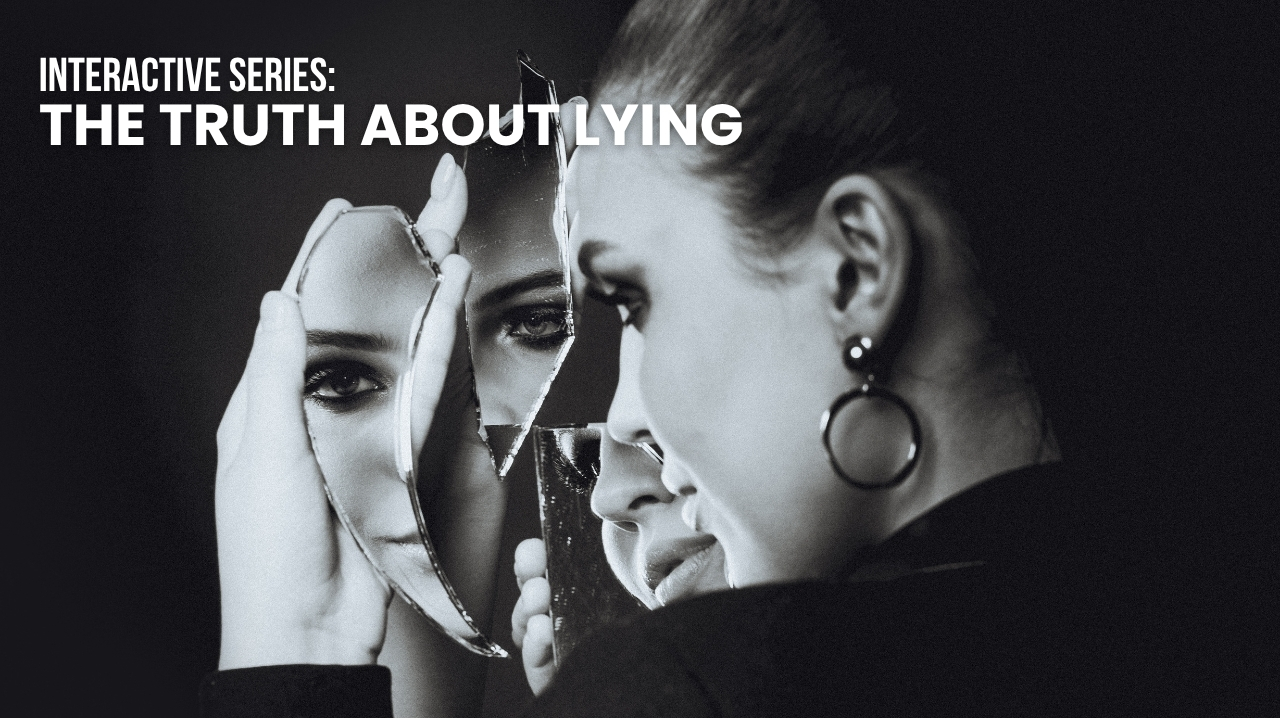
Interactive Series: E1: The Truth About Lying
Why honesty gets harder the more pressure you carry
There are moments in leadership that feel ordinary on the outside and heavy on the inside.
You are sitting across from someone, nodding, listening, choosing your words carefully. You know more than you are saying. You tell yourself you are being thoughtful. Measured. Strategic. You are trying not to create panic. Trying not to trigger emotion. Trying not to make the moment worse than it already is.
So you offer part of the truth.
Not the whole thing. Just enough to move the conversation along.
And for a moment, it feels justified.
Then later, something shifts. The person finds out more. Their trust changes. The room changes. You feel it in the way they respond, in what they no longer say, in the way safety quietly leaves the conversation. Nothing dramatic happened. No shouting. No confrontation. Just a subtle withdrawal.
This is where so many of us live without naming it.
We think lying is obvious. We think it belongs to people with bad intent, weak character, or something to hide. But the truth is far less convenient than that. Lying often happens in competent people, caring people, high-performing people, and leaders who are trying to hold too much at once. The transcript makes that plain by naming the three main ways we lie: the obvious lie, lying by omission, and self-deception.
The Story Beneath the Surface
The deeper pattern is not just dishonesty. It is self-protection.
Most people are not waking up in the morning planning to deceive someone. They are trying to avoid conflict. Protect an image. Preserve stability. Stay liked. Stay respected. Stay safe. Sometimes they are trying to protect another person from discomfort. Sometimes they are trying to protect themselves from being exposed, corrected, or seen more clearly than they want to be.
That is what makes this hard.
Because when lying is tied to self-protection, it rarely feels malicious. It feels reasonable. It feels necessary. It feels like something we can explain. We tell ourselves we are managing the situation. Softening the blow. Keeping things productive. Giving only what is needed for now.
Underneath that logic is usually a quieter fear.
If I say the whole thing, what will happen next?
If I tell the truth, will I lose credibility?
Will I be blamed?
Will I disappoint them?
Will they see me differently?
Will I have to face something I am not ready to face in myself?
This is why the topic reaches beyond honesty. It touches identity. It touches leadership. It touches the hidden negotiations we make between truth and comfort every single day.
How This Pattern Gets Reinforced
Patterns like this do not usually begin with one giant betrayal. They begin small.
A moment of discomfort creates a thought. The thought creates a story. The story shapes behavior. The behavior creates a result that seems to reward the pattern. So we do it again.
A leader feels pressure and thinks, I cannot tell them everything yet.
That thought creates a belief: withholding is safer than full transparency.
That belief shapes behavior: edit the message, soften the risk, omit a key detail.
The result is temporary relief.
No conflict. No hard reaction. No immediate fallout.
And that relief teaches the nervous system that partial truth works.
The same thing happens with the obvious lie. Someone wants to look competent, likable, or certain, so they say something untrue. The transcript cites research showing that lying is far more common than people think, with 60% of people lying at least once in a ten-minute conversation, often while trying to make a good impression.
Then there is lying by omission, which may be the most socially acceptable form. This one does not always sound like dishonesty. It sounds like editing. Prioritizing. Framing. But when a meaningful part of the picture is deliberately left out, trust still gets distorted. The transcript describes this as a slippery slope, especially in leadership environments where people can sense they are getting only part of the truth.
And then there is self-deception, the most dangerous of the three. This is where the lie is no longer something we tell. It becomes something we believe. That is where it becomes hardest to detect, because it no longer feels like performance. It feels like reality.
A Real Moment That Changed Perspective
There is a specific kind of pain that comes from finding out later.
You discover that a decision had already been made. That concern had already been raised. That someone knew more than they said. Suddenly you replay the conversation with new ears. You realize the words were technically clean, but the truth was not whole.
Many leaders have lived this from both sides.
They have been the one left in the dark, wondering why no one just told them. And they have been the one holding information, convincing themselves that timing, tone, or protection justified the omission. The transcript opens right inside that tension: knowing the real truth of a situation while the other person does not, and feeling the pull to massage the truth so the impact lands differently.
But the more perspective-shifting moment comes later.
It is the realization that the most costly lies are not always the loud ones. Sometimes the deepest damage comes from what was left out. And sometimes the hardest truth to face is not what we said to someone else, but what we have been saying to ourselves for a very long time.
That is where self-deception enters. The transcript frames it powerfully: we can deceive ourselves first so that we deceive others more convincingly. That is sobering because it means the body stops signaling. The usual signs of lying fall away. We do not feel false because, in that moment, we believe our own story.
Why This Is Hard to Change Alone
Awareness helps, but it is rarely enough.
Leadership environments reward certainty, decisiveness, composure, and confidence. They do not always reward visible honesty in the moment, especially when honesty involves admitting doubt, naming tension, or acknowledging a mistake before the outcome is known. Many people learn early that telling the whole truth can cost them status, approval, or influence.
So they adapt.
They become polished. Careful. Impressive. Skilled at reading the room. Skilled at managing perceptions. Skilled at shaping messages so they create less friction.
The problem is that the same skill set that helps someone survive pressure can also make it harder to be honest with themselves.
This is especially true for high performers. The transcript points out that the more successful a leader becomes, the more sophisticated their self-deception can become, because the brain starts protecting the story of who they are. Feedback feels personal. Repetition feels justified. Blind spots get reinforced by achievement.
That is why people often cannot see their own pattern from inside the pattern.
They need reflection. They need interruption. They need environments where truth is not punished. They need relationships strong enough to hold honesty without collapse.
What This Really Requires
Real change requires more than trying to be “more truthful.”
It requires alignment.
It requires the willingness to notice where your words, your image, your behavior, and your inner reality have drifted apart. It requires honesty that is not performative. Honesty that is not used as a weapon. Honesty that begins inward before it moves outward.
It also requires support.
The transcript speaks directly to this by describing the importance of having people who help clean up the stories in our own minds, because self-deception is hard to unwind alone. When that cleanup happens, the result is not just moral improvement. It is clearer leadership, deeper connection, faster growth, and more meaningful impact.
This kind of work is not about perfection.
It is about becoming more trustworthy in your own life. It is about catching the small distortions earlier. The exaggeration. The omission. The carefully edited story. The inner narrative that protects your identity but keeps you from reality.
It is also about becoming kinder as you do it.
Because shame does not make people more honest. It usually makes them more hidden.
Where This Leaves You
The truth is that most of us are not choosing between honesty and dishonesty in some dramatic, black-and-white way.
We are choosing, moment by moment, between comfort and clarity.
Sometimes we tell the obvious lie because we want to look better. Sometimes we use omission because it feels safer than saying the whole thing. Sometimes we slip into self-deception because facing reality would require us to loosen our grip on the story we have built about ourselves.
Seeing that clearly is not discouraging. It is freeing.
Because once the pattern is named, it no longer runs the room in quite the same way. It becomes something you can notice. Something you can interrupt. Something you can clean up.
And in leadership, that matters.
Not because leaders need to become flawless, but because people can feel the difference between performance and truth. They can feel when someone is managing perception. They can feel when something important is missing. They can feel when a person has done the harder work of becoming honest enough with themselves that others no longer have to guess where they stand.
That kind of honesty creates steadiness.
It creates safety.
It creates the kind of leadership people trust, not because it is perfect, but because it is real.
Want to Go Deeper?
This article expands on the conversation explored in the Empowered Team Podcast episode “The Truth About Lying.”
In this episode, Kari explores the deeper inner game behind this pattern and why awareness alone rarely creates lasting change.
You can listen to the full episode here:
https://podcasts.apple.com/us/podcast/interactive-series-e1-the-truth-about-lying/id1439022418?i=1000762346119
Then continue the conversation here:
https://link.theempowered.ca/widget/bookings/empowered-leadership-consulting-meet-kari


