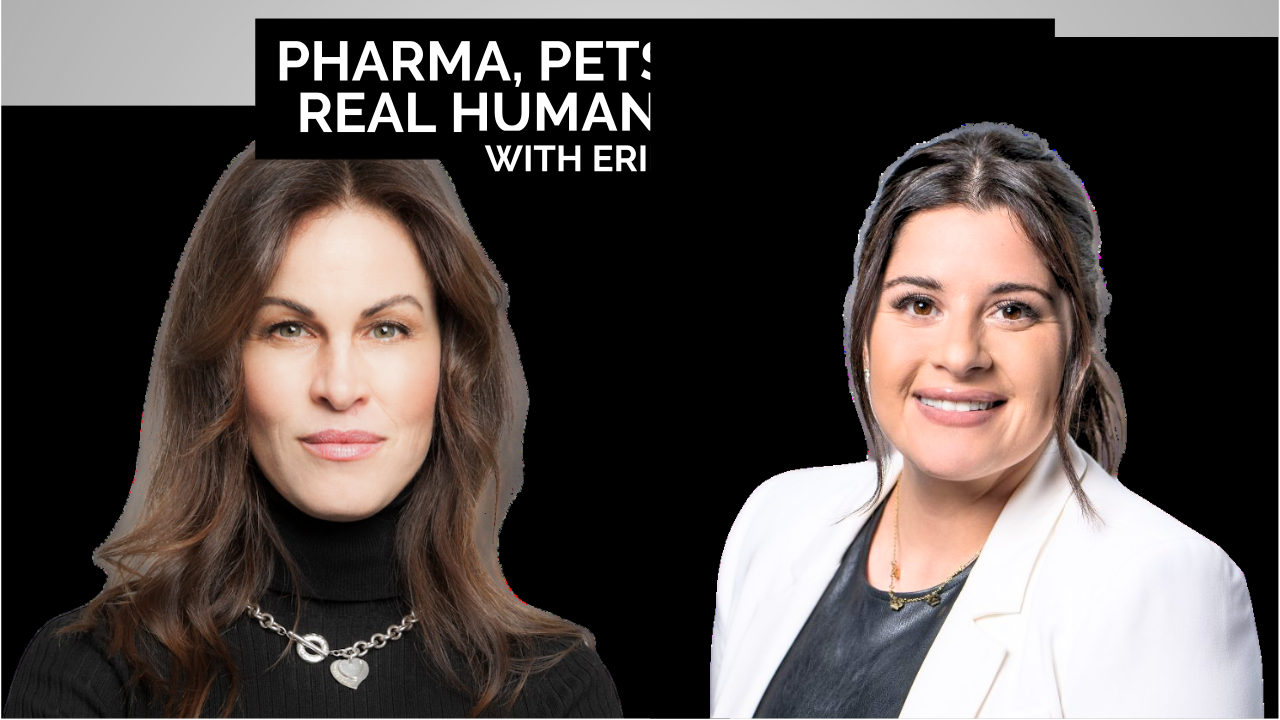
Erika Sinner Interview: Pharma, Pets & Purpose- Real Human Leadership
What happens when high performance and humanity finally meet
There is something unexpected about Erika Sinner.
On paper, she is a multi eight figure founder. The CEO of a pharmaceutical commercialization firm. A leader recognized on the Inc. 5000 list. Someone who understands FDA timelines, boardroom pressure, investor expectations, and what it takes to bring medicine to market.
And yet behind her sits a glittered sign that says love.
She survived eleven rounds of layoffs.
She built a company to solve the instability she lived through.
She wrote a bestselling book called Pets Are Family.
She stepped in to save a nonprofit that helps children in hospitals feel like superheroes.
At first glance, these worlds appear separate.
In reality, they are deeply connected.
The Story Beneath the Surface
Erika entered pharmaceutical commercialization at twenty one.
She worked inside major organizations helping medications move from development into the hands of doctors and patients. She saw innovation up close. She saw ambition. She saw how high stakes the process truly is.
Each year, thousands of new drug applications are submitted to the FDA. Only a small fraction are approved. When approval is delayed or additional information is required, companies shift into cash preservation mode.
Cash preservation mode often means layoffs.
Erika experienced eleven rounds of them across mergers and acquisitions.
Eleven times watching teams dissolve.
Eleven times wondering whether her role would remain.
Eleven cycles of uncertainty shaping how people showed up at work.
Experiences like that do not just change operations. They change identity.
They teach you that talent does not guarantee safety.
They teach you how easily employees become line items.
They teach you that high performance environments can be both inspiring and destabilizing.
And somewhere inside that pattern, a question forms.
Is there another way to build this?
How This Pattern Gets Reinforced
In industries driven by regulation, timelines, and capital, urgency becomes culture.
Approvals matter. Investor confidence matters. Market timing matters.
When pressure rises, leaders instinctively tighten control.
Hiring slows. Budgets shrink. Decisions narrow.
In response, employees adapt.
They protect themselves.
They analyze tone in emails.
They wonder if their role will exist next quarter.
They hesitate to take risks or speak openly.
Leaders often reinforce this pattern without intending to.
One on ones are canceled because something more urgent appears.
Silence is interpreted as agreement.
Execution is prioritized over acknowledgment.
Over time, uncertainty becomes normalized.
People continue performing, but they do so while holding their breath.
The cost is rarely named.
Erika recognized this cycle because she lived it repeatedly.
She chose not to repeat it.
A Real Moment That Changed Perspective
When Erika stepped out of corporate pharma to consult independently, she believed she was choosing freedom.
She proved she could work virtually before remote work was widely accepted. She built a client base. She said yes to every opportunity because she did not know when it might stop.
Eventually, the pace caught up with her.
Overcommitment turned into overwhelm.
Overwhelm turned into burnout.
Burnout led to a panic attack that landed her in the emergency room.
That moment was not weakness.
It was clarity.
It revealed that intelligence and discipline are not substitutes for structure and support.
From that realization, she founded Directory.
Her firm partners with small to mid size pharmaceutical companies through structured statements of work. Instead of building internal teams only to release them based on FDA outcomes, companies engage Erika’s team for commercialization expertise.
Her employees remain stable.
The companies gain top talent.
The pressure of regulatory uncertainty no longer destabilizes the workforce.
It is a strategic solution.
It is also a human one.
Why This Is Hard to Change Alone
Systems shape behavior.
Boardrooms are not designed around emotional nuance. Shareholder calls rarely reward vulnerability. Many leaders were trained in environments where survival was the priority.
That mindset does not disappear automatically.
Erika did not simply decide to “be empathetic.”
She embedded empathy into operations.
One on ones are mandatory.
Acknowledgment is intentional.
Moments that matter are identified and protected.
Managers are equipped to celebrate milestones and address performance clearly.
Standards remain high.
Humanity remains visible.
This balance requires courage from everyone involved.
Executives must articulate their thinking.
Team members must speak honestly.
Leaders must allow emotion without losing structure.
It is easier to default to detachment.
It is harder to design connection into the system itself.
What This Really Requires
Erika’s philosophy extends beyond pharma.
When she lost her dog, Kingston, the grief surprised her in its depth.
She had already implemented pet bereavement leave for her employees. When she needed to take it herself, she felt hesitation.
Shame for naming the loss.
Shame for admitting she was not okay.
That experience led her to write Pets Are Family.
The data supports what many people already feel. The human animal bond is biologically and psychologically significant. Loss affects concentration, productivity, and mental health.
Yet many workplaces treat it as minor.
Erika chose to treat it as real.
She also stepped into leadership at Tiny Superheroes, a nonprofit transforming hospital culture for children facing serious medical conditions.
Children wear capes.
Procedures become missions.
Milestones earn badges.
Play replaces fear.
The philosophy is consistent across every initiative.
Safety builds trust.
Trust changes outcomes.
Across pharma commercialization, corporate culture, grief recognition, and pediatric hospitals, the thread is clear.
Leadership that honors the whole human.
Where This Leaves You
Erika Sinner does not separate performance from humanity.
She integrates them.
She understands FDA approvals and board accountability.
She also understands grief, play, acknowledgment, and belonging.
She has built businesses where empathy strengthens execution rather than weakening it.
Real human leadership does not reduce standards.
It stabilizes performance.
It creates environments where people can focus because they feel secure.
It encourages innovation because trust exists.
It demands courage.
It demands structure.
It demands consistency.
And it demands leaders willing to show up as whole humans in every room they enter.
Want to Go Deeper?
This blog is inspired by Episode 382 of The Empowered Team Podcast featuring Erika Sinner. In the full conversation, we explore pharmaceutical commercialization, empathy driven culture, pet bereavement leave, Tiny Superheroes, and what it truly means to lead as a whole human.
Listen to the full episode here: https://podcasts.apple.com/us/podcast/erika-sinner-interview-pharma-pets-purpose-real-human/id1439022418?i=1000750958242
If you are building a company and want performance and humanity to coexist without compromise, you can book a leadership conversation here:
https://link.theempowered.ca/widget/bookings/empowered-leadership-consulting-meet-kari


